Showing posts with label B. Show all posts

Sunday, October 2, 2011

Bigmouth Buffalo

The bigmouth buffalo are group spawners which produce 250,000 eggs/kg of adult weight, their eggs are approximately 1.5 mm in diameter. 

Bigmouth Buffalo
The bigmouth buffalo is a dull tanish olive shade with shadowy fins. Enjoy alternate suckers it has an extended dorsal fin, but unlike others it has an extensive sideways and terminal mouth. It is the most vast of the buffalo fish and scopes a length of something greater than 4 ft (1.2 m) and 65 lb (29 kg) in weight.

Wednesday, September 21, 2011

Blue-Eyed Pleco

Blue-eyed pleco have been kept as aquarium fish, and were decently mainstream the same time as the 1980's and early 1990's.

Blue-Eyed Pleco
The blue-eyed pleco (Panaque cochliodon), is a herbivorous freshwater armored catfish from South America. It is nearly identified with the famous plecostomus catfish kept in a large number of aquaria as a pond greenery eater, but is quickly recognized by being dull grey to dark and having shining, turquoise coloured eyes. Love alternate species of the Panaque class, P. cochliodon sustains essential on submerged wood.

Friday, August 5, 2011

Bluegill

Bluegill are characterized by their deep, flattened, laterally compressed bodies.

Bluegill
The bluegill is noted for the dark spot that it has on the posterior part of its dorsal fin. The sides of its head and chin are a dark shade of blue. It usually contains 5-9 vertical bars on the sides of its body, but these stripes aren't aways distinct. It has a yellowish breast and abdomen, with the breast of the breeding male being a bright orange. The bluegill has three anal spines, ten to twelve anal fin rays, six to thirteen dorsal fin spines, eleven to twelve dorsal rays, and twelve to thirteen pectoral rays.

Sunday, July 24, 2011

Bala shark


Bala sharks are found in midwater depths in large and medium-sized rivers and lakes. They feed on phytoplankton, but mostly on small crustaceans, rotifers, and insects and their larvae.

Bala sharkBala sharks are popular aquarium fish. These fish are generally peaceful and good companions to many other types of tropical fish. The nickname "shark" is used because of their torpedo shaped bodies and long fins.

Friday, July 1, 2011

Blue Tang


A member of the surgeonfish family that has distinctive coloration and is occasionally encountered by anglers, the blue tang is sometimes used as an aquarium fish and is also marketed fresh.

Blue Tang
The oval, profound-bodied, and packed blue tang is more roundabout than are different surgeonfish. Its coloring is almost entirely blue, ranging from powdery to deep purple, and it has many dark or light blue horizontal stripes running down the sides and blending into the background.

Saturday, May 28, 2011

Bowfin


When its lake becomes scarce, a bowfin can tunnel into the mud at the base and go into a profound summer rest until the drizzles benefit. This activity is known as aestivation.

Bowfin
The bowfin is a sturdy, barrel-shaped fish that can survive conditions that few alternate fish can. It can even live out of water for a full day, so long as its skin does not dry out. The bowfin can do this because its swim bladder, as well as controlling buoyancy, can also function as a lung. It has even been reported that farmers digging land that has been flooded have actually plowed up bowfins. The fish have tunneled into the mud in readiness for their June through August timeframe rest (aestivation).

Friday, May 27, 2011

Bitterlings


A considerable number of beasts shroud their eggs to keep them at a distance from the nosy eyes of predators. Bitterlings do this, but they go a fascinating step further by laying their eggs in a most unusual place.

Bitterlings
While alternate fish lay their eggs right around the rock of a stream, scatter them among fine-leaved plants, or even carry them inside their own bodies, few go as far as bitterlings. These fish lay their eggs inside another animal. The unsuspecting foster parent can do nothing about this. It cannot swim away, attack the intruding bitterling, or even protect itself. It simply has to accept its fostering duties.

Tuesday, May 17, 2011

Barnacles


Choosing the right place to settle is a major step for young barnacles, as they must choose a favorable spot where they can safely grow. If they make the wrong choice they will suffer, as they cannot move again.
Barnacles
Barnacles are marine animals, commonly found on rocks, driftwood, shells of turtles, whales, and among corals. The acorn barnacles are usually found on the middle part of the seashore. Here, they are regularly covered and uncovered by the tides which bring them food and oxygen. They have small volcanoshaped shells made of four to six plates cemented directly on the rocks. At the top is an opening guarded by more shell plates.These can be opened, and then closed tightly to keep water inside when the tide goes

Saturday, May 14, 2011

Beard Worms


Beard worms live in the deep sea, often in thermal vents in the sea floor. Unlike most animals, they gain their energy from bacteria. These bacteria break down chemicals from the sea to release energy.

Beard Worms
Daylight never spans the profound sea depths, so creatures living there cannot get life from the Sun. Beard worms have solved this problem by using a chemical called hydrogen sulfide that spews into the water from underwater volcanoes. This substance is noxious to a considerable number of creatures, but facial hair worms can eat it resulting from the fact that their forms hold extraordinary microorganisms that transform the hydrogen sulfide into nourishment for their

Boxfish


Boxfish have been described as cubes with holes for the eyes, mouth, and tail—and sometimes even horns. They also poison themselves on occasions, although the poison is really intended for their enemies.

Boxfish
When a boxfish is alarmed, it reacts by releasing a poison into the water. This is intended to deter any predator intent on making a meal out of the boxfish.However, if the poison is released in a confined space, such as a small cave, it can be powerful enough to kill some predators. For the boxfish it is an excellent

Wednesday, May 11, 2011

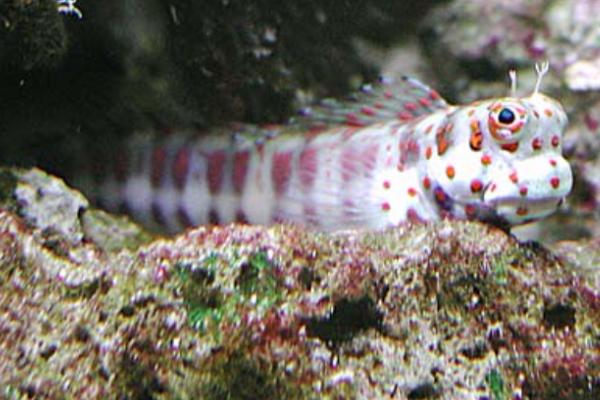
Blennies


Some blennies are among the best make-believe artists in the fish world. They look like another —harmless— species, but this is just a trick to get close enough to other fish to bite a chunk out of them.

Blennies
In the struggle to eat and avoid being eaten, fish (including blennies) have evolved a vast range of survival techniques. One is the art of mimicry— that is, pretending to be something that you are not. The sabre-toothed blenny, for example, looks almost identical to the cleaner wrasse. The cleaner wrasse is

Tuesday, May 10, 2011

Butterflyfish


Today, butterflyfish are seen as beautiful reef fish both in the wild and in the aquarium. However, the first humans who set eyes on them were far more interested in how good they were to eat.

Butterflyfish
Butterflyfish are still caught for eating today, but only on a local basis and the numbers are small. Outside their home waters butterflyfish are popular not as food fish, but as aquarium fish. Their dazzling colors and

Barbs


Deep in a cave in Zaire lives a small, blind fish, while deep in shady forest streams in Sri Lanka lives a beautiful, cherry-colored jewel-like fish. Their whiskers tell scientists that they are cousins.

Barbs
The whiskers—known as barbels—are not the only features that link the blind cave barb and the cherry barb.They share other similarities, not just between them, but with several hundred other species that form a group of mostly small fish known as barbs. Scientists do not all agree about which fish should be called barbs. The largest barb

Monday, May 9, 2011

Bichirs


Bichirs have a row of small fins along their backs that look like flagpoles and flags, hence their other name, the flagfish. Their  pectoral (chest), fins also grow from tiny “fans.”

The “flagpole and flag”arrangement is unique to bichirs and their closest relatives,the ropefish. Where other fish have one,or sometimes two,“normal” fins along the back,in bichirs each spine of the fin is separated from the others. Each carries a number of horizontal rays,creating a series of distinctive flagpoles and flags,which can number up to eighteen., The “fans”are
Bichirs

Sunday, May 8, 2011

Batfish


Batfish look as if they have been half run over. The front end, just behind the head, has a flattened, almost squashed appearance, while the back end is almost round.

Batfish
Such an unusual combination of body shapes hardly makes batfish look elegant or streamlined. However, over countless generations they have evolved features that suit them perfectly for their way of life. The batfish lifestyle is firmly linked to the sea floor, where they lie in wait for their meals to come to them. Batfish can swim, but do not swim well. They spend most of their time either not moving at all, or “walking” on the bottom, using their limblike pectoral (chest) fins and pelvic (hip) fins as arms and legs.